
Latest
Pets
Golden Retriever Icon Tucker Budzyn Dies at 8September 10, 2026
We Value Every Life
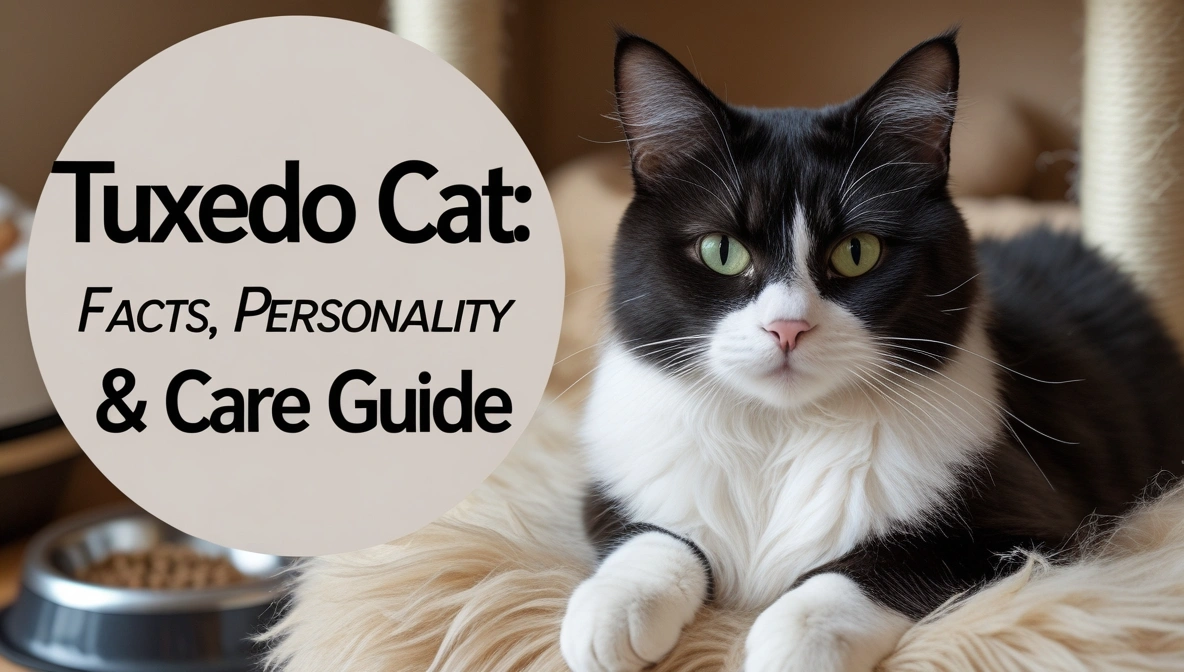
The tuxedo cat is one of the most recognizable cats in the entire world – the black fur, the white chest and paws, the occasional patch of white below the chin that resembles a bow tie. People notice them. People look. People invariably ask, “What breed is that cat?” The response is invariably a surprise to them. A tuxedo cat isn’t a breed at all. It’s a coat pattern, and that coat pattern can appear in dozens of different breeds of cat – and in just about any alley and shelter in the entire country.
And the tuxedo cat, frankly, is worth an entire guide to itself just for the sheer volume of misinformation about it. That stunning black and white pattern gets so much of the attention, and while it is quite magnificent to behold, there is so much more to this feline dandy than what appears on its sleek outer coat. The genetics behind the pattern, the personality characteristics that owners invariably report, health issues to consider, the incredible and famous tuxedo cats who wore their coat patterns into history – it all warrants further attention. If you’re contemplating adoption or if you’re already lucky enough to share your home with one of these beauties, here’s what you need to know.
No. The most common misconception of the tuxedo cat, and this is something that should be clarified. A tuxedo is the coloring of the cat, black with white on the chest, stomach, feet, and possibly face. The following breeds can have this coloring:
So when asked about the breed, the only possible answer is that there is no breed named the tuxedo cat. It can be applied to any breed, and the domestic cat and the genetics have no bearing on this, and it is a beautiful chance occurrence.
The tuxedo pattern arises due to the white spotting gene that stops the spread of pigment cells (melanocytes) throughout the cat’s body. Where the pigment cells have stopped, the hair grows white, and where they are still present, the hair is black.
Previously, the belief was that the pigment cells were “slow-moving” in tuxedo kittens, and by the time the embryo had finished development, they hadn’t gotten to the belly or the paws yet. This has now been discredited. Pigment cells increase and spread randomly when an embryo is developing – there is no actual code being followed, and the white patches occur by chance.
The “classic”tuxedo cat breed is the cat that is generally all black with the “correct” white patches, though there is a great deal of variety in just how far the white extends in any specific instance, and every tuxedo is different.
However, this rule of “black dominant” is just a guideline. As stated above, every tuxedo cat looks different!
A tuxedo cat can exist in any coat length:
Basically, if your cat is mostly white, then you’re going to own a Harlequin or a Van, not a Tuxedo cat.
Here’s where it gets curious. Coat color has been proven not to affect the temperament-that fact bears saying right upfront. But across many decades, owners of tuxedo cats have all independently reported very similar traits.
No coat guarantees this, of course. A tuxedo raised in an unhealthy, tense environment will obviously not become naturally outgoing and friendly. However, the similarity between descriptions of so many cats of this pattern (across many breeds) is too marked not to bear noticing.
The tuxedo cat breed has had quite an array of experiences, showing up in literature, war, cartoons, and the White House. Just a few to consider:
Tuxedo cats are expected to live as long as other domestic cats. The presence of the coat coloring has nothing to do with the length of their lives. Most indoor cats can live between thirteen to seventeen years and many indoor tuxedo cat have lived well into their twenties. There have been documented cases of tuxedo cats who have lived longer than twenty-six years.
Because a tuxedo cat may be any pure breed or domestic mix, the health risks may be a result of lineage. There are common health risks in cats that you should be aware of:
Like all cat breeds, the Tuxedo will have its individual needs, but like the breeds of cat, the care required for your pet will depend greatly on the individual. A short-haired Domestic Tuxedo will require a tiny fraction of the care needed for a long-haired Maine Coon Tuxedo, but here is a general guide:
Feeding your cat a high-quality diet that uses an animal product as a primary ingredient will have long-lasting beneficial effects.
Avoid free feeding dry Kibble and feed more regularly on wet food for better water intake and for weight management issues. Obesity is one of the most easily avoidable health issues in cats.
Highly energetic and almost dog-like in their play, these tuxedo cats do not adapt well to a dull environment. Ensure their owners can provide them with:
The tuxedo cat has its reputation not from any particular breed or bloodline, but from a trait that keeps churning out animals that are memorable in that same pattern: chatty, intelligent, human-hugging, and pretty in a way that pictures do not convey. The inheritance of the coat is accidental. What happens with the owner almost never seems to be.
When you think of adopting, shelters everywhere are stuffed with tuxedo cats in need of homes. These pets are not fussy about their food or require exotic, elaborate diets. Most commonly, the tuxedo cat needs attention from you, interaction. That, owners say, makes them want to be with you; what the cat gives back to you will almost certainly outweigh what it ever takes from you.
No, tuxedo is actually a name for the colour pattern black and white bicolour, which can be displayed in almost any breed as well as mixtures.
They are quite common. White spotting is a normal gene, and you will very frequently find tuxedo cats available for rehoming.
Many are, as there are countless tuxedo cat owners who have reported their pet to be very friendly towards other animals. Of course, it goes down to the cat!
There is no proof whatsoever that the color of your cats has any effect on their intelligence. However, owners of tuxedo cats say that they are far easier to train, and can work out problems more quickly than any other cat with colored fur.
Tuxedo cats can live on average 13 to 17 years in the wild. Good quality ones could be living 20 plus!

Pet N Plants, a passionate group of authors who are devoted pet and nature enthusiasts. With over 15 years of experience in pet and plant care, our authors bring a wealth of knowledge and a deep love for all things flora and fauna. Each member of our team is dedicated to sharing insightful tips, detailed care guides, and the latest trends to help you nurture your beloved pets and plants. Whether you're a seasoned gardener or a pet parent, our experts are here to support your journey in creating a thriving, vibrant home environment for all your living companions.


0