
Latest
Pets
Golden Retriever Icon Tucker Budzyn Dies at 8September 10, 2026
We Value Every Life
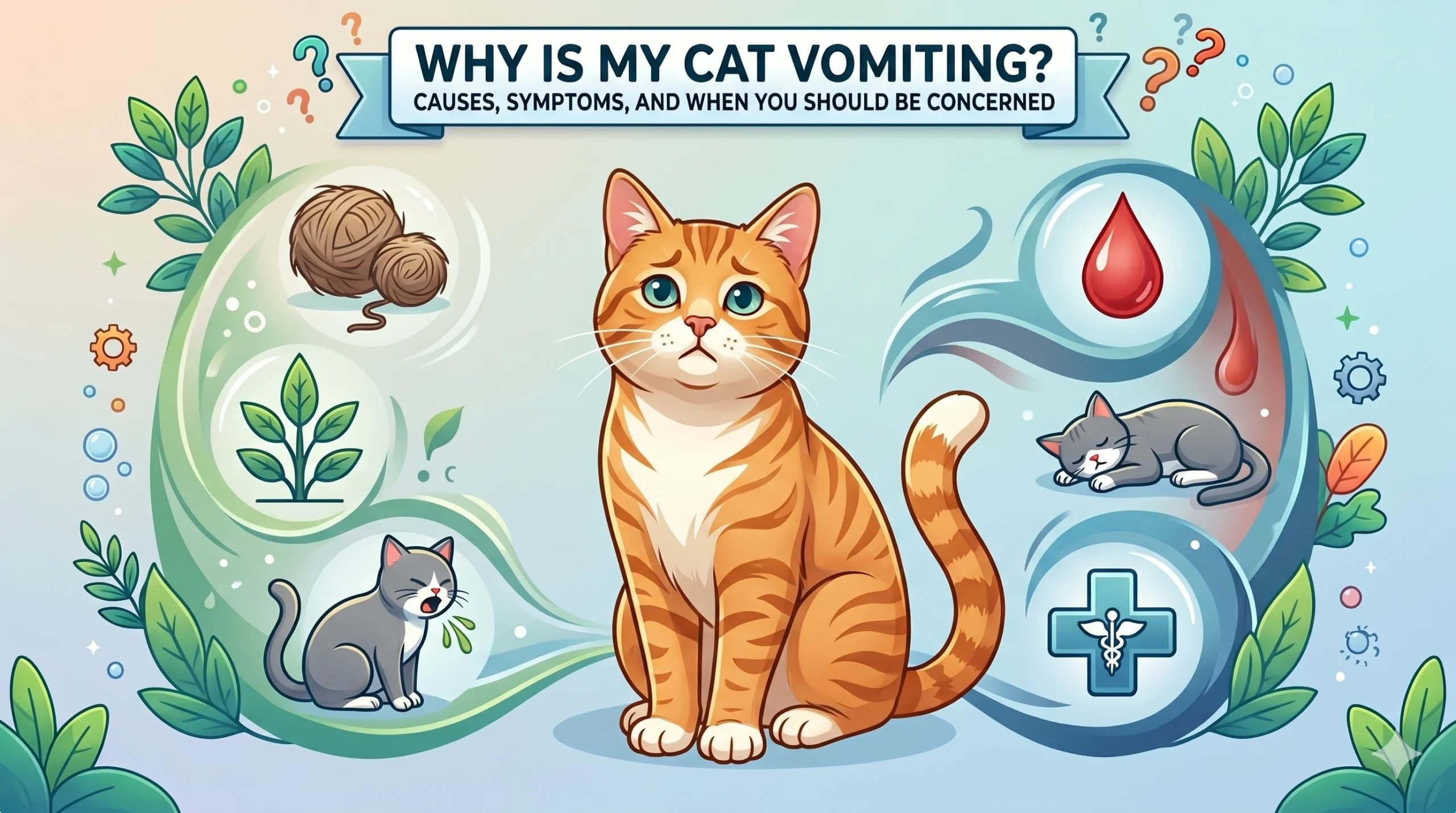
Why is my cat vomiting? If you’ve found yourself asking this question, you’re certainly not alone. Vomiting is one of the most common reasons cat owners seek veterinary advice. Watching your cat suddenly retch, gag, and bring up food or liquid can be frightening, especially when you don’t know whether it’s something minor or the first sign of a serious illness. While an occasional episode may simply be caused by a hairball or eating too quickly, vomiting can also indicate digestive disorders, infections, kidney disease, liver problems, poisoning, or even an intestinal blockage. The challenge is that many of these conditions initially look very similar, making it difficult for even experienced cat owners to identify the exact cause without professional help.
As a loving cat parent, your first instinct is naturally to help your pet feel better. However, knowing what to watch for—and understanding when vomiting is harmless versus when it is an emergency—can make a significant difference in your cat’s health. This guide explains the most common causes of vomiting in cats, what symptoms deserve immediate attention, and how veterinarians approach diagnosis and treatment.
Disclaimer: This article is intended for educational purposes only and should not replace professional veterinary advice. If your cat vomits repeatedly, has blood in the vomit, refuses food or water, becomes lethargic, appears to be in pain, or you suspect they have swallowed a foreign object or toxic substance, consult a licensed veterinarian immediately. Early diagnosis often leads to better outcomes.
Many cat owners have heard the phrase, “Cats vomit sometimes; it’s normal.” While there is a small amount of truth to this statement, it can also be misleading. Healthy cats may occasionally vomit a hairball or bring up food after eating too quickly, but frequent vomiting should never be considered normal. Cats are naturally skilled at hiding illness, so repeated vomiting is often one of the earliest outward signs that something isn’t right internally.
The frequency of vomiting is just as important as the vomit itself. A young, healthy cat that vomits a single hairball once every few months and immediately returns to eating, drinking, and playing is very different from a cat that vomits several times in a week or loses interest in food after vomiting. Even if your cat appears normal between episodes, recurring vomiting deserves veterinary evaluation because chronic digestive irritation can eventually lead to dehydration, nutritional deficiencies, and worsening disease.
Another important distinction is between vomiting and regurgitation. Although many people use these words interchangeably, they describe two different processes.
Vomiting is an active process. Your cat will usually show signs such as nausea, drooling, swallowing repeatedly, crouching, and forceful abdominal contractions before bringing up stomach contents. The vomit often contains partially digested food, bile, or fluid.
Regurgitation, on the other hand, happens with little or no warning. Undigested food simply comes back up from the esophagus without the heaving associated with vomiting. Conditions affecting the esophagus rather than the stomach are usually responsible for regurgitation, and the treatment approach is different.
Understanding whether your cat is vomiting or regurgitating can help your veterinarian narrow down the possible causes much more quickly.
One of the first questions your veterinarian is likely to ask is how long your cat has been vomiting.
Acute vomiting refers to episodes that begin suddenly, often within the last 24 to 48 hours. This type of vomiting may occur after eating spoiled food, swallowing something irritating, experiencing a mild stomach infection, or consuming a toxic substance. In many cases, acute vomiting resolves quickly with appropriate treatment, but it can also signal a medical emergency if it is severe or persistent.
Chronic vomiting is different. It refers to vomiting that occurs repeatedly over weeks or months. Some cats may vomit once every few days, while others may vomit once or twice a week for several months. Unfortunately, many owners mistakenly accept this as “normal for my cat,” when it can actually indicate inflammatory bowel disease, food allergies, kidney disease, hyperthyroidism, liver disease, or even certain cancers.
Because chronic vomiting develops gradually, it is often overlooked until weight loss, dehydration, or appetite changes become obvious. Seeking veterinary advice early gives your cat the best chance of successful treatment.
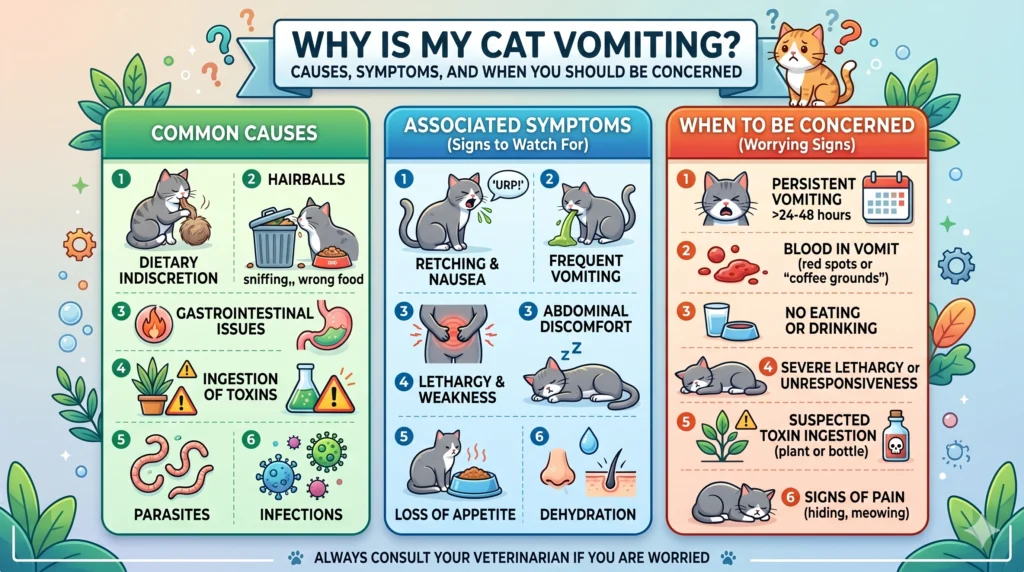
If you’ve been wondering, “Why is my cat throwing up?”, the answer depends on several factors including your cat’s age, diet, medical history, and accompanying symptoms. Below are the most common reasons veterinarians diagnose in clinical practice.
Hairballs are perhaps the best-known reason cats vomit, but they’re also one of the most misunderstood. Cats spend a significant portion of their day grooming themselves. During grooming, tiny hairs are swallowed and usually pass harmlessly through the digestive tract. Occasionally, however, these hairs accumulate inside the stomach and form a compact mass known as a hairball.
When the stomach cannot move the hairball into the intestines, it attempts to expel it by vomiting.
Long-haired breeds such as Persians, Maine Coons, and Ragdolls tend to experience hairballs more frequently because they swallow larger amounts of fur during grooming. Older cats may also develop hairballs more often as they groom themselves more extensively.
Although occasional hairballs are generally not dangerous, frequent hairball vomiting should not be ignored. It may indicate excessive grooming due to allergies, skin disease, stress, parasites, or an underlying digestive disorder that prevents hair from moving normally through the gastrointestinal tract.
Regular brushing, especially during seasonal shedding, can significantly reduce swallowed hair and lower the frequency of hairballs.
Some cats become so enthusiastic at mealtime that they swallow large amounts of food without chewing properly. The stomach suddenly expands, triggering a reflex that causes the food to come back up almost immediately.
This type of vomiting usually occurs within five to fifteen minutes after eating. The vomit often consists of undigested kibble that still looks much like it did in the food bowl.
Fortunately, this is one of the easier causes to manage. Feeding smaller meals throughout the day, using slow-feeder bowls, or placing food in puzzle feeders encourages slower eating and gives the stomach time to process the meal more comfortably.
However, if your cat begins vomiting after nearly every meal despite eating slowly, further investigation is necessary because digestive disease or esophageal disorders may be involved.
Cats are creatures of habit, and their digestive systems often prefer consistency. Abruptly changing from one type of food to another can upset the delicate balance of bacteria in the intestines, leading to vomiting, diarrhea, or reduced appetite.
Many owners unknowingly trigger digestive upset when switching brands or flavors overnight. Even changing from dry food to canned food too quickly can cause stomach irritation in sensitive cats.
Veterinarians generally recommend introducing any new diet gradually over seven to ten days. By slowly increasing the proportion of the new food while decreasing the old one, the digestive tract has time to adapt, reducing the likelihood of vomiting.
If vomiting continues despite a gradual transition, your cat may have a food intolerance or an underlying gastrointestinal disorder that requires further evaluation.
Not every episode of vomiting is caused by a simple upset stomach. Some cats develop sensitivities or allergies to ingredients in their food. Unlike temporary digestive irritation, food allergies involve an abnormal immune response that can cause chronic inflammation throughout the digestive tract.
Cats with food allergies often experience repeated vomiting, but many also develop itchy skin, excessive grooming, ear infections, or diarrhea. Common dietary triggers include beef, chicken, fish, dairy products, and certain grains, although virtually any protein can become problematic.
Diagnosing food allergies isn’t as simple as performing a blood test. Instead, veterinarians usually recommend a carefully controlled elimination diet using either a novel protein or a hydrolyzed prescription diet for several weeks. During this period, the cat should consume nothing else—not even treats or flavored medications—to accurately identify whether food is contributing to the vomiting.
Because food allergies can closely resemble inflammatory bowel disease or other digestive disorders, professional guidance is essential for an accurate diagnosis.
One of the more common medical reasons behind vomiting is an infection affecting the stomach or intestines. These infections may be caused by viruses, bacteria, intestinal parasites, or even fungal organisms, depending on where your cat lives and its lifestyle. Kittens, senior cats, and cats with weakened immune systems are particularly vulnerable because their bodies cannot fight infections as effectively as healthy adult cats.
When an infectious organism irritates the digestive tract, the stomach responds by attempting to expel its contents. In addition to vomiting, your cat may develop diarrhea, fever, dehydration, poor appetite, and noticeable lethargy. Some cats become withdrawn and spend most of the day hiding, while others may continue drinking water but refuse food altogether.
Outdoor cats are generally at greater risk because they may hunt infected prey, drink contaminated water, or come into contact with other sick animals. Even indoor cats, however, are not completely protected, as parasites and viruses can occasionally be carried into the home on shoes, clothing, or other pets.
Treatment depends entirely on the underlying cause. A bacterial infection may require antibiotics, while viral infections often rely on supportive care such as fluids and anti-nausea medication. Parasites require specific deworming medications, which is why obtaining a proper diagnosis from your veterinarian is essential before beginning treatment.
Many cat parents associate worms with kittens, but intestinal parasites can affect cats of any age. Roundworms, hookworms, tapeworms, whipworms, and microscopic parasites such as Giardia can all irritate the digestive tract enough to cause vomiting.
Parasites damage the intestinal lining, interfere with nutrient absorption, and trigger inflammation throughout the gastrointestinal system. Some cats may vomit only occasionally, while others experience chronic digestive upset, diarrhea, weight loss, a dull coat, or a bloated abdomen.
Routine fecal examinations are an important part of preventive healthcare because many parasites cannot be identified simply by looking at the stool. Fortunately, most intestinal parasites respond well to prescription deworming medications, and maintaining regular parasite prevention greatly reduces the risk of future infections.
Cats are naturally curious, but their unique liver metabolism makes them far more sensitive to toxins than many other animals. Even substances that seem harmless to humans can cause severe illness in cats.
Common household dangers include lilies, antifreeze, human pain medications such as ibuprofen or acetaminophen, rodenticides, household cleaners, insecticides, chocolate, onions, garlic, grapes, raisins, essential oils, nicotine products, and certain human foods.
Vomiting is often one of the earliest signs of poisoning, but it is rarely the only symptom. Depending on the toxin involved, your cat may also drool excessively, tremble, have difficulty walking, experience seizures, breathe rapidly, or collapse.
If you suspect poisoning—even if you’re not completely certain—do not wait to see whether your cat improves. Immediate veterinary treatment offers the best chance of recovery. Bringing the packaging or a photograph of the suspected toxin can also help your veterinarian choose the most appropriate treatment.
Cats, particularly young and playful ones, have a habit of swallowing objects that were never meant to be eaten. Strings, ribbons, sewing thread, hair ties, rubber bands, plastic packaging, small toys, and even pieces of fabric can become lodged inside the digestive tract.
Unlike simple stomach irritation, an intestinal blockage prevents food and fluids from moving normally through the intestines. As pressure builds, vomiting often becomes frequent and severe. The cat may refuse food, become painful when touched around the abdomen, stop passing stool, or strain unsuccessfully in the litter box.
One particularly dangerous situation occurs when a cat swallows string. Even if part of the string remains visible from the mouth or rectum, owners should never attempt to pull it out. The string may be wrapped around sections of the intestine, and pulling it can cause life-threatening internal injuries.
Most intestinal blockages require emergency surgery, making early diagnosis extremely important.
Kidney disease is one of the most common illnesses affecting middle-aged and senior cats. Healthy kidneys filter waste products from the bloodstream, regulate hydration, and maintain the body’s electrolyte balance. When kidney function begins to decline, toxins gradually accumulate in the bloodstream, often leading to nausea and vomiting.
Unlike sudden stomach upset, kidney disease develops slowly. Many owners first notice subtle changes, such as increased drinking, more frequent urination, gradual weight loss, poor appetite, or a decline in grooming habits. Vomiting often appears later as toxin levels continue to rise.
Although chronic kidney disease cannot usually be cured, early diagnosis allows veterinarians to slow its progression through specialized diets, medications, hydration therapy, and regular monitoring. Cats diagnosed early often maintain an excellent quality of life for several years.
The liver performs hundreds of vital functions, including detoxification, nutrient storage, and the production of proteins essential for life. When liver disease develops, the digestive system is often affected first.
Cats with liver disease may vomit repeatedly because toxins that should normally be processed by the liver begin circulating throughout the body. They may also develop reduced appetite, significant weight loss, lethargy, and jaundice—a yellow discoloration of the eyes, gums, or skin.
Several conditions can affect the feline liver, including infections, inflammation, fatty liver disease (hepatic lipidosis), and tumors. Because many liver disorders share similar symptoms, blood tests and imaging studies are usually necessary to determine the exact cause.
The pancreas is responsible for producing digestive enzymes and hormones that regulate blood sugar. When it becomes inflamed—a condition known as pancreatitis—it can cause severe digestive upset.
Unlike dogs, cats with pancreatitis often display subtle symptoms that are easy to miss. Vomiting may occur alongside decreased appetite, hiding, fatigue, dehydration, and abdominal discomfort. Some cats simply stop eating and become unusually quiet.
Diagnosing pancreatitis can be challenging because no single symptom confirms the condition. Veterinarians typically rely on blood tests, abdominal ultrasound, and a thorough physical examination.
Treatment focuses on controlling nausea, relieving pain, maintaining hydration, and supporting nutrition while the pancreas heals.
Hyperthyroidism is another common disease in older cats. It occurs when the thyroid gland produces excessive amounts of thyroid hormone, causing the body’s metabolism to accelerate dramatically.
Cats with hyperthyroidism often eat ravenously but continue losing weight. Many also experience vomiting, diarrhea, increased thirst, restlessness, rapid heart rate, and hyperactivity.
Fortunately, several effective treatments are available, including daily medication, prescription diets, radioactive iodine therapy, and surgery in selected cases.
Although hearing the word “cancer” is frightening, it is important to remember that not every vomiting cat has cancer. However, tumors affecting the stomach or intestines can cause persistent vomiting, particularly in older cats.
Cancer-related vomiting often develops gradually and may be accompanied by progressive weight loss, reduced appetite, anemia, weakness, and changes in bowel habits. Because these symptoms overlap with many other diseases, advanced diagnostic testing—including ultrasound, endoscopy, or biopsy—is often required for confirmation.
Early diagnosis significantly improves treatment options and may allow surgery, chemotherapy, or supportive care to provide meaningful improvements in quality of life.
The appearance of vomit can provide valuable clues about what may be happening inside your cat’s body, although it should never be used as the only basis for diagnosis.
If your cat vomits undigested food shortly after eating, rapid eating or regurgitation may be responsible. Yellow vomit usually contains bile, suggesting that the stomach has been empty for an extended period or that irritation is affecting the upper digestive tract.
White foamy vomit often develops when the stomach is empty but continues producing acid. While this can occur with mild gastritis, repeated episodes deserve veterinary evaluation.
A hairball is usually long, tubular, and mixed with fur. Occasional hairballs are expected, but frequent hairball vomiting may indicate excessive grooming or underlying digestive disease.
Perhaps the most concerning finding is blood in the vomit. Fresh, bright red blood may indicate bleeding in the mouth, esophagus, or stomach, while dark brown or coffee-ground material often suggests partially digested blood originating deeper within the digestive tract. Both situations require prompt veterinary assessment.
While not every vomiting episode requires an emergency visit, some situations should never be ignored.
If your cat vomits repeatedly within a few hours, cannot keep water down, appears weak, collapses, struggles to breathe, develops a swollen abdomen, has blood in the vomit, or you suspect poisoning or a swallowed foreign object, seek veterinary care immediately.
Cats become dehydrated much more quickly than many owners realize. Even a single day of persistent vomiting can significantly affect circulation, kidney function, and overall health, especially in kittens, senior cats, and those with underlying medical conditions.
When you take your cat to the veterinarian for vomiting, the first and perhaps most important step is gathering a detailed history. Your veterinarian will ask questions about when the vomiting began, how often it occurs, whether it happens after meals or randomly throughout the day, what the vomit looks like, and whether your cat has experienced any other symptoms such as diarrhea, weight loss, increased thirst, or changes in appetite. Although these questions may seem routine, the answers often provide valuable clues that help narrow down the list of possible causes.
After discussing your cat’s history, your veterinarian will perform a thorough physical examination. They will assess your cat’s hydration status, body weight, temperature, abdominal tenderness, oral health, heart rate, and overall condition. Sometimes, the examination alone may reveal signs of dehydration, abdominal pain, enlarged organs, or intestinal masses.
If further investigation is needed, diagnostic testing may include blood work to evaluate kidney function, liver enzymes, blood sugar levels, thyroid hormones, and signs of infection or inflammation. A urine sample can provide additional information about kidney health and hydration. Fecal examinations help identify intestinal parasites that may be causing chronic vomiting.
Imaging techniques such as abdominal X-rays or ultrasound allow veterinarians to look for foreign objects, intestinal blockages, tumors, thickened intestines, enlarged organs, or pancreatitis. In chronic or unexplained cases, an endoscopy or intestinal biopsy may be recommended to diagnose inflammatory bowel disease or certain cancers.
Although some owners worry about the cost of diagnostic tests, identifying the correct cause early often prevents unnecessary treatments and may save both time and money in the long run.
One of the first questions many cat parents ask is whether they can treat vomiting at home. The answer depends entirely on your cat’s overall condition.
If your cat vomits only once, remains bright, playful, alert, and continues drinking water normally, your veterinarian may recommend monitoring the situation closely for the next 12 to 24 hours. However, kittens, senior cats, diabetic cats, or cats with existing medical conditions should always be evaluated more promptly because dehydration develops much faster in these animals.
Fresh water should always be available unless your veterinarian specifically advises otherwise. Dehydration is one of the greatest risks associated with vomiting, and even mild fluid loss can make your cat feel considerably worse.
Once vomiting has stopped, your veterinarian may recommend reintroducing food gradually using small portions of an easily digestible veterinary-approved diet. Returning immediately to a large meal can trigger another episode of vomiting, so patience is important.
Most importantly, observe your cat carefully. Are they eating normally? Using the litter box? Walking comfortably? Grooming themselves? Small behavioral changes often provide valuable information before more obvious symptoms appear.
One of the biggest mistakes cat owners make is giving human medications to treat vomiting. Many over-the-counter medicines that are considered safe for people can be extremely dangerous—or even fatal—for cats.
Painkillers such as ibuprofen, naproxen, and acetaminophen are particularly toxic. Even medications used for nausea in humans should never be given unless specifically prescribed by a veterinarian.
Similarly, avoid forcing food or water into a cat that continues vomiting. Doing so may worsen nausea or increase the risk of aspiration if the cat cannot swallow properly.
Another dangerous mistake involves pulling on visible string hanging from your cat’s mouth or rectum. While it may seem helpful, string often becomes wrapped around sections of the intestines. Pulling it can cause severe internal injuries that require emergency surgery.
Finally, never delay seeking veterinary care simply because your cat appears “a little better.” Many serious illnesses fluctuate during the early stages, and temporary improvement does not always mean the underlying problem has resolved.
Although not every cause of vomiting can be prevented, many cases are avoidable with good daily care.
Regular grooming is especially important for medium- and long-haired cats. Brushing removes loose hair before it can be swallowed, reducing the likelihood of hairball formation. During seasonal shedding, increasing grooming frequency can make a noticeable difference.
Nutrition also plays a major role. Feeding a complete, balanced diet from a reputable manufacturer supports digestive health, while sudden dietary changes should always be avoided. If you need to change foods, introduce the new diet gradually over at least one week.
Cats that eat too quickly often benefit from smaller, more frequent meals or specially designed slow-feeder bowls. These simple changes reduce stomach overload and decrease post-meal vomiting.
Routine veterinary examinations remain one of the best preventive measures. Annual or twice-yearly checkups allow early detection of kidney disease, thyroid disorders, dental disease, liver problems, and other conditions before vomiting becomes a major symptom.
Keeping toxic plants, medications, cleaning products, string, sewing supplies, rubber bands, and small toys safely out of your cat’s reach also prevents many emergency situations.
While a single isolated episode of vomiting may not always be an emergency, there are situations where professional medical care should never be delayed.
Contact your veterinarian immediately if your cat:
Cats are masters at hiding pain. By the time obvious symptoms develop, the underlying disease may already be advanced. When in doubt, it is always safer to seek veterinary advice rather than waiting.
Occasional vomiting without other symptoms can occur because of hairballs, eating too quickly, or mild stomach irritation. However, if the vomiting becomes frequent—even if your cat appears otherwise healthy—it should be investigated by a veterinarian.
Repeated vomiting after eating is not normal. It may indicate rapid eating, food intolerance, inflammation of the digestive tract, an esophageal disorder, or even a partial intestinal obstruction. Veterinary evaluation is recommended.
Do not make major dietary decisions without consulting your veterinarian. Depending on the cause, a short period of stomach rest followed by gradual reintroduction of food may be appropriate, but kittens and cats with medical conditions require special consideration.
Yes. Stressful events such as moving house, introducing another pet, boarding, loud noises, or significant routine changes can contribute to digestive upset in some cats. However, stress should never be assumed to be the only cause until medical conditions have been ruled out.
There is no exact number that applies to every cat, but vomiting several times in a month, vomiting every week, or experiencing repeated episodes over several months is not considered normal and should always be discussed with your veterinarian.
If you’ve been asking yourself, “Why is my cat vomiting?”, remember that vomiting is a symptom—not a diagnosis. While a simple hairball or a meal eaten too quickly may explain an isolated episode, repeated vomiting can be the first sign of illnesses ranging from food allergies and gastrointestinal infections to kidney disease, pancreatitis, or intestinal blockages.
The most important thing you can do as a cat parent is observe your pet carefully. Notice changes in appetite, drinking habits, litter box use, energy levels, and the appearance of the vomit itself. These details may seem small, but they provide your veterinarian with valuable information that helps identify the underlying cause more quickly.
Never ignore persistent vomiting or assume your cat will “get over it.” Cats often hide illness remarkably well, and by the time obvious symptoms appear, the disease may already have progressed. Early veterinary intervention not only improves the chances of successful treatment but can also prevent unnecessary suffering and potentially save your cat’s life.
With attentive care, regular veterinary checkups, proper nutrition, and a safe home environment, many causes of vomiting can either be prevented or managed successfully. Your cat depends on you to recognize when something is wrong—and your prompt action can make all the difference.

Pet N Plants, a passionate group of authors who are devoted pet and nature enthusiasts. With over 15 years of experience in pet and plant care, our authors bring a wealth of knowledge and a deep love for all things flora and fauna. Each member of our team is dedicated to sharing insightful tips, detailed care guides, and the latest trends to help you nurture your beloved pets and plants. Whether you're a seasoned gardener or a pet parent, our experts are here to support your journey in creating a thriving, vibrant home environment for all your living companions.


0